Need garage door spring repair services in Old Westbury?
- Clear steps before you pick up a phone
- Providers in our network do the work
- Repair, new doors, and spring work
- Request an estimate with no obligation
No obligation
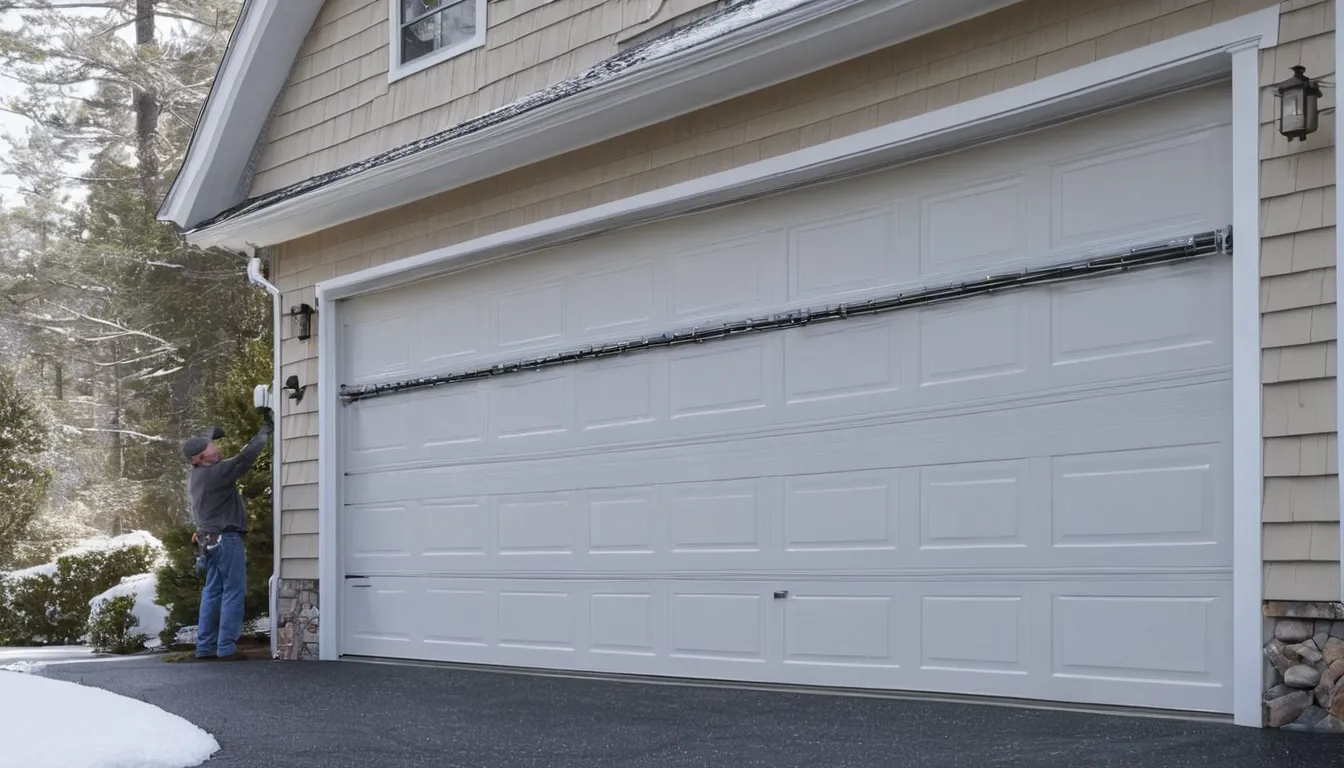
A garage door spring holds the full weight of your door. When it snaps, the door gets heavy fast, and the opener can strain or burn out if you keep pushing the button.
Interviewswelcome Garage Doors is a referral service. We do not repair springs. We connect homeowners in Old Westbury, NY and the Old Westbury area with independent providers in our network who have the right winding bars and tools. This page walks you through what to do in the first minutes, the first days, and the first weeks, and where a handy homeowner should stop.
You may have heard a loud bang from the garage. That sound is often a spring letting go. Take a breath and start with what is safe.
Signature rule: Look, don't lift.
The first minutes are about safety, not repair. A door with a broken spring can weigh well over a hundred pounds. Without the spring, nothing balances that weight. A door that looks stuck may drop if it moves.
Unplug the opener if you can reach the cord without standing under the door. That keeps someone from pressing the wall button by mistake.
You can check this with your eyes and ears. No tools needed.
Stop at the spring. Look, take a photo, and step back.
The opener is your main worry on day one. It was built to guide a balanced door, not lift a dead weight. Each button press adds strain to the motor and the chain or belt. Leave it off.
If your car is stuck inside, ask the provider about options when you call. Many providers can respond quickly, but availability varies, so Request a callback to check provider availability.
Most homes have one of two types.
Torsion springs sit on a bar above the door. They twist to store energy. They are common on newer and heavier doors.
Extension springs run along the horizontal tracks on each side. They stretch and shrink as the door moves. Older homes, including many Cape Cod style houses, often have them.
Both store a lot of force. Both can hurt you when they let go. Extension springs also need safety cables so a broken spring does not whip across the garage.
I love a good weekend project. This is not one of them. Springs are under heavy tension. Torsion springs need proper winding bars, not screwdrivers. A slipped bar can cause serious injury.
Spring size also matters. The right spring depends on door weight, height, and drum size. A wrong match can leave the door unbalanced or fast to wear out.
Here is what you can safely do:
A door left broken for days can pick up more problems. Cables can slip off the drums. Rollers can jump the track. A bent or knocked track alignment can follow, and that makes the repair longer.
In cold snowy weather, a stuck door also leaves your garage open to drifts and damp. Freeze-thaw cycles can make metal parts stiff, so a small issue can turn into a bigger one.
A typical visit follows a few plain steps.
Most providers replace springs in pairs, since the second one is the same age and often close behind.
Standard springs are rated for a set number of open-and-close cycles. A family that uses the garage as the main door may hit that number sooner than you think. High-cycle springs are built for more cycles and cost more up front. Ask the provider which fits how often you use the door.
If the opener was run hard on a broken spring, it may need a look. Some homeowners decide to add a new garage door opener at the same visit. That is a choice, not a must. Ask the provider to test the old one first.
If the door is stuck open and you cannot secure the home, say so when you call. Emergency garage service availability depends on the provider, so check what is possible in your area.
After the repair, check the timeline again. Open the door by hand once a month to feel the balance. Lubricate hinges and rollers as the provider advises. Springs wear out over time, and a quick yearly look can catch trouble early.
A provider removes the failed spring and fits a matched one sized to your door.
Providers often suggest replacing both springs so wear stays even.
Frayed cables and worn drums are checked during the visit.
The door is tested by hand and by opener before the visit ends.
Prices vary by door size, spring type, and your area. These are typical U.S. ranges only. Ask the provider for a written quote before work starts, and ask what is included in the price.
| Item | Typical range | Notes |
|---|---|---|
| Single torsion spring | $150 – $350 | Parts and labor, varies by size |
| Pair of torsion springs | $200 – $450 | Most common choice |
| Extension spring pair | $150 – $300 | Often includes safety cables |
| High-cycle spring upgrade | $250 – $600 | Built for more door cycles |
| Cable replacement | $100 – $250 | If frayed or off the drum |
| Roller or track fix | $100 – $300 | Depends on damage |
Stop using the door and opener. Keep people and pets away from the door.
Check for a gap in the spring and take a photo.
Request a callback to check provider availability in your area.
Ask for a written quote, then approve the work.
Know which steps are safe to do yourself.
See what a broken spring can lead to in minutes, days, and weeks.
We refer you to local providers who do the work with proper tools.
Simple notes on spring types and questions to ask.
It is not safe to try. The door may feel very heavy and can drop without warning. Unplug the opener, keep clear, and let a provider handle the lift and repair.
Standard springs often last several years, depending on how often you use the door. Cold weather, rust, and heavy use can wear them faster. A provider can check the spring rating.
Usually springs break from wear, so many policies do not cover them. Some policies may cover sudden damage, so check your policy. Providers can often help document damage for a claim.
Door stuck, noisy, or hanging crooked? Request a callback or send a request, and a local provider in our network can follow up.
No obligation